
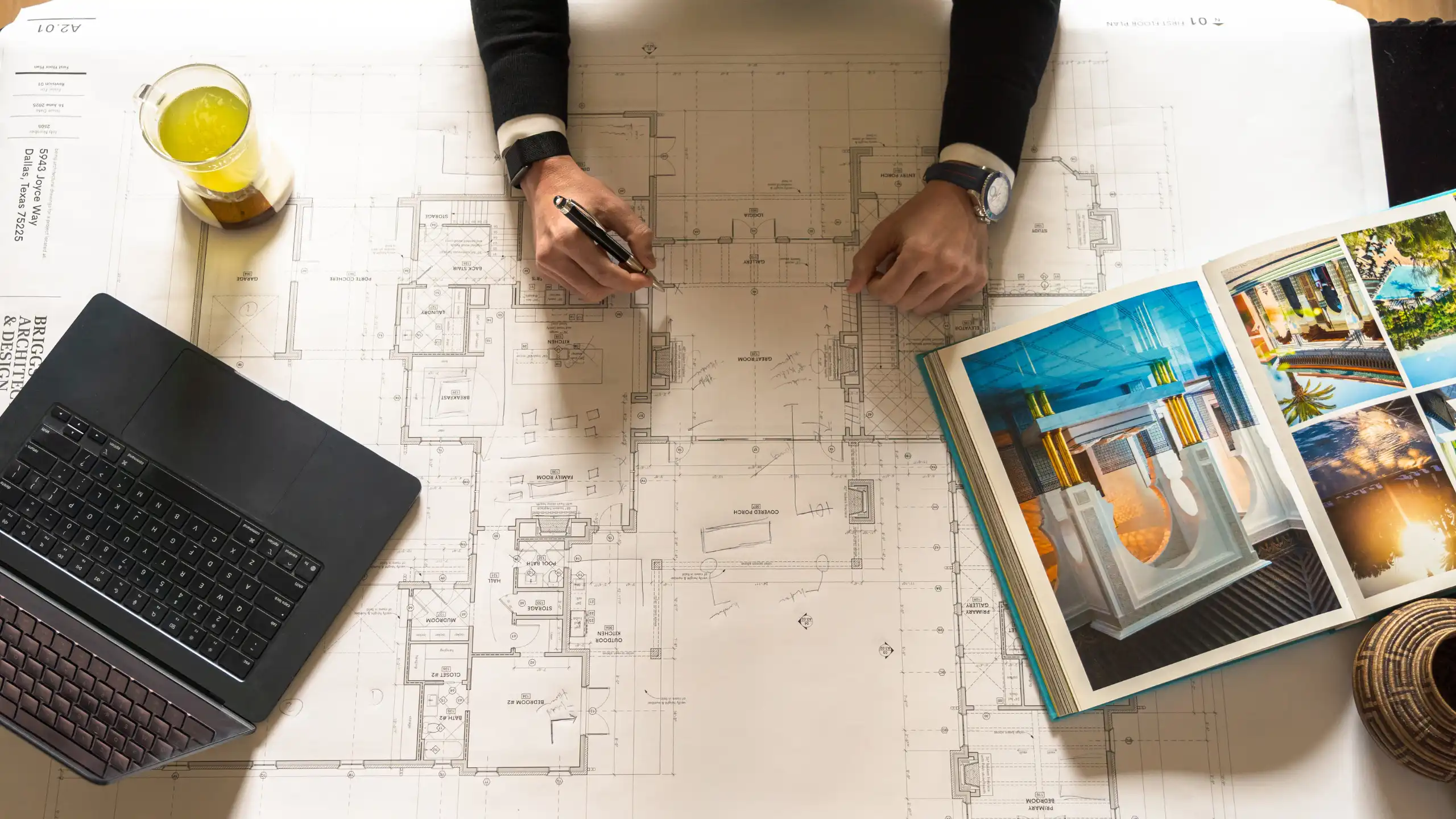
How New York City shaped the way I think about home, hospitality, and what I choose to build today.
New York City is the only place on earth where you can be surrounded by millions of people and still feel completely, profoundly alone, and somehow, more inspired than anywhere else.
From the time I was young, I was fascinated by the invisible lines the city drew between its people. I’d look up at the 50th floor of some Fifth Avenue tower and wonder: who are these people? The ones chauffeured home to their gilded-age brownstones, living lives that looked like a film set from the outside.
Then I’d wander downtown and find the artists and designers nursing diluted diner coffee at The Coffee Shop on Union Square, sharp, brilliant, broke, selling dreams to the very uptown aristocrats they openly resented.
What struck me, even as a kid, was this: despite everything that separated them, money, zip code, vocabulary, they all wanted the same thing. Access to the finest things life had to offer. The obsession with beauty, with quality, with the good life, cut across every class line the city pretended to draw.
I had a fortunate early childhood. Park Avenue. Dalton. Luxury vacations, nice clothes, the whole performance. From the outside, I had it all.
What no one saw was that my home had become a battlefield.
My parents’ divorce stretched across six brutal years. My brother made leaving the apartment feel like a tactical exercise. Boy, did he seem to find a way to piss everybody off. My uncle, someone I loved deeply, was dying from AIDS. And as the attorneys bled the family dry, the families we’d grown up alongside quietly disappeared. Their kids weren’t allowed to spend time with me anymore. We no longer met their social standards.
Everything I had known as my life, gone. Not gradually. All at once.
But it was the city that gave me something to hold onto.
In those last weeks before my mother moved us to Dallas to “start over,” I walked. Hours every night. Fifteen years old, out until 3am, until my feet gave out and my mind finally went quiet.
I’d find my way to new development projects, sneaking past scaffolding, slipping past security, not really knowing why. Just drawn to the bones of things being built. The possibility of something that didn’t exist yet.
Even as everything familiar was being dismantled, the city kept building. That meant something to me, even if I couldn’t articulate it then.
As I got older, the hunger for movement and architecture only grew. I backpacked from Hong Kong to Delhi, through Europe, down into Mexico, chasing something I couldn’t name. And what I learned was that the more I saw, the less I thought I knew.
The most defining experiences weren’t at the most prestigious addresses. They were at the places that stopped me cold: a rooftop guesthouse in Hong Kong, a street-level hotel in Bangkok, a guesthouse tucked into the chaos of Delhi, a canal-side room in Amsterdam, places that somehow made me feel at home, in the deepest sense of that word.
Not comfortable.
Home.
There’s a difference.
That distinction became my obsession. What creates that feeling? What makes a space feel like it receives you rather than simply houses you?
And more importantly, how do you build it?
Most people who develop luxury properties are building toward an exit. A price per square foot. A sale.
I’m building toward something harder to quantify: the feeling I found in those hotels and those streets, that I’d thought I lost at fifteen. The feeling that wherever you are, you belong there. That your home isn’t just beautiful, it holds you.
That’s why I build. Not to construct square footage. To create the kind of spaces that do for someone else what the city once did for me.
Give them somewhere to return to.
Social Cookies
Social Cookies are used to enable you to share pages and content you find interesting throughout the website through third-party social networking or other websites (including, potentially for advertising purposes related to social networking).